FEBRUARY MASTERCLASS
Loving When You Were Raised By or Partnered with a Narcissist
A 90-minute live workshop for women who are excellent at reading everyone else—so you can finally understand why love has felt so hard and start choosing differently.

You can read anyone.
Except yourself.
You walk into a room and you know things. Who’s upset. Who’s lying. Who needs something before they’ve said a word. You can manage your boss’s mood, your team’s anxiety, your mother’s feelings—all before your first cup of coffee.
You learned this young. You had to.
Because the parent who was supposed to mirror you back to yourself—to show you that you were seen, valued, loved just as you were—instead demanded that you mirror them. Their needs. Their moods. Their fragile ego.
That wasn’t parenting. That was role reversal. And it rewired everything—your entire attachment system.
For some people, this wiring didn’t start in childhood—but was reinforced or re-created later in a romantic relationship where someone else’s needs, moods, or ego slowly eclipsed their own.
Now you’re in your thirties or forties, successful by every external metric, and love still feels impossibly hard. Maybe you keep ending up in the same relationship with different faces—attracted to people who need managing, saving, or impressing. Maybe you’ve poured yourself into work, into causes, into taking care of everyone else, and your own desires went underground somewhere along the way. Maybe the question “What do you want in a partner?” makes your mind go blank.
You confuse anxiety for chemistry. Available people feel boring—or suspicious. And somewhere in there, you catch yourself thinking: Why is this so hard for me? Why does everyone else seem to figure this out?
You’re not bad at relationships. You’re running them on miscalibrated wiring—a relational GPS that was programmed before you ever went on a first date.

Here’s what’s likely happening on a deeper level.
When you spent significant time in close relationship with a narcissistic parent or partner, your brain learned something specific: other people’s internal states? Your responsibility. Their needs come first. Their moods matter most. Your survival—or sense of emotional safety—depended on reading them accurately.
That wasn’t a choice. That was adaptation.
Marion Woodman, the Jungian analyst, named something that stopped me cold the first time I read it. She wrote:
“Because the child was expected to mirror the parent, instead of the parent mirroring the child, the young potential was stifled.”
This same dynamic can also occur later in adulthood, when a romantic relationship requires chronic emotional vigilance, self-abandonment, or caretaking in order to stay connected.
Here’s what that means for you.
You were supposed to be seen. Delighted in. Reflected back to yourself so you could understand who you were. Instead? You became the mirror. Your job was reading their states. Managing their emotions. Keeping the peace.
And that same wiring—the wiring that makes you exceptional at reading others—is now running your romantic life.
Your proverbial relational GPS—meaning the core neural pathways, emotional templates, and unconscious beliefs about love that were programmed in your childhood home—got miscalibrated before you ever went on a first date. It’s pointing you toward what feels familiar. Or it’s telling you that wanting anything at all is too dangerous. Not toward what’s healthy.
That’s why “chemistry” often lies, whether this wiring formed in childhood or was reinforced in a narcissistic romantic relationship. That’s why available people feel boring—or why you’ve stopped letting yourself want at all. That’s why you keep ending up in the same relationship with different faces, or why intimacy feels like a language you were never taught.
The strategy that saved you is now shaping your love life.
WHAT MAKES THIS DIFFERENT
Most relationship workshops start with “What do you want in a partner?” and hand you a checklist.
They skip the questions that matter more:
Why are you attracted to the people you’re attracted to?
(Or is your nervous system confusing familiar activation for chemistry?)
Is your “type” actually yours—or is it your family wiring running the show?
Can you even hear what you want—or does the question make your mind go blank?
Why does wanting things feel so dangerous?
This workshop answers those questions first. Then we rebuild. Then we practice.
We won’t pretend there are easy answers. But we will give you frameworks that actually work—and practices to help you stay grounded when old patterns try to hijack your choices.
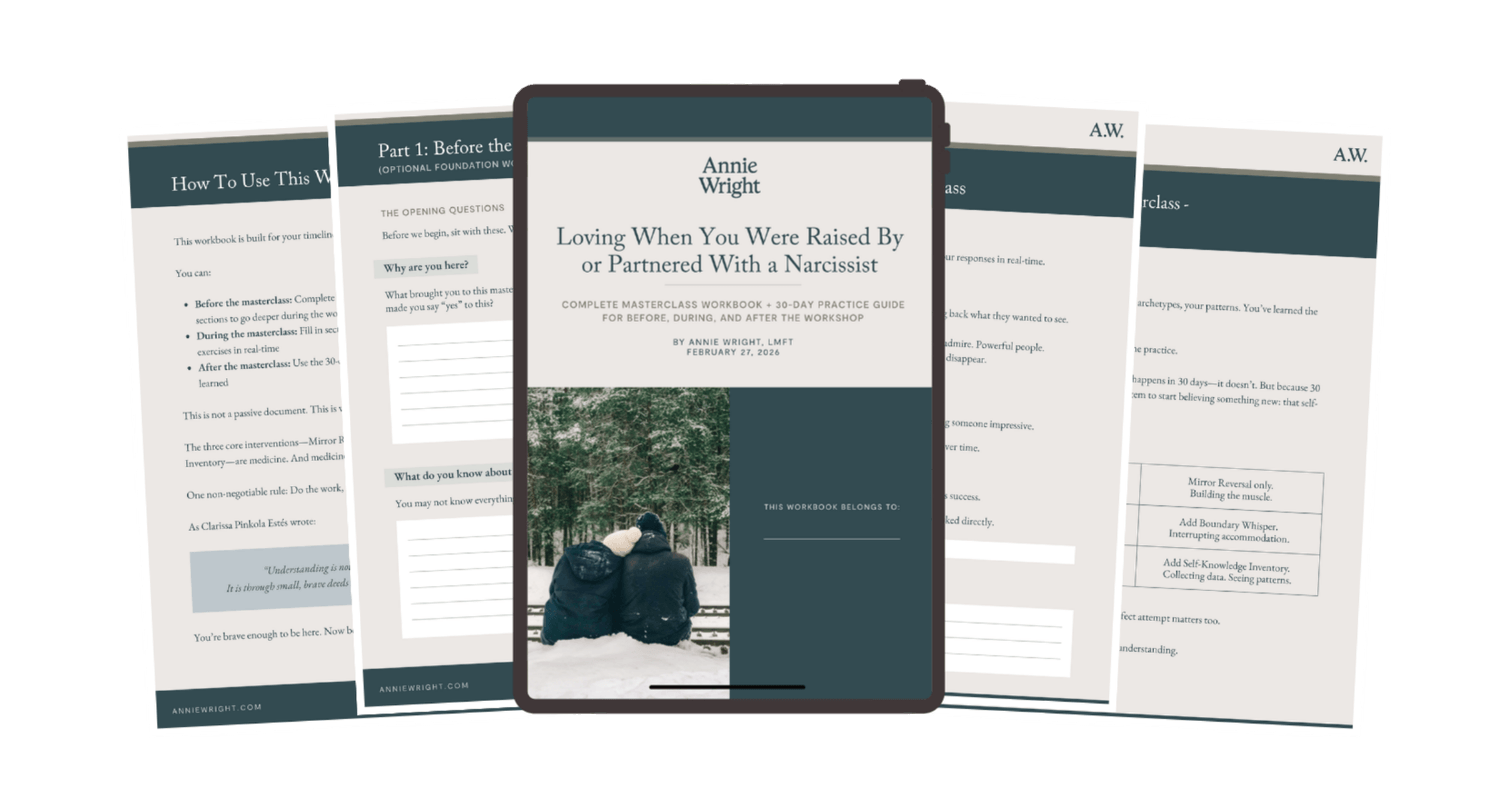
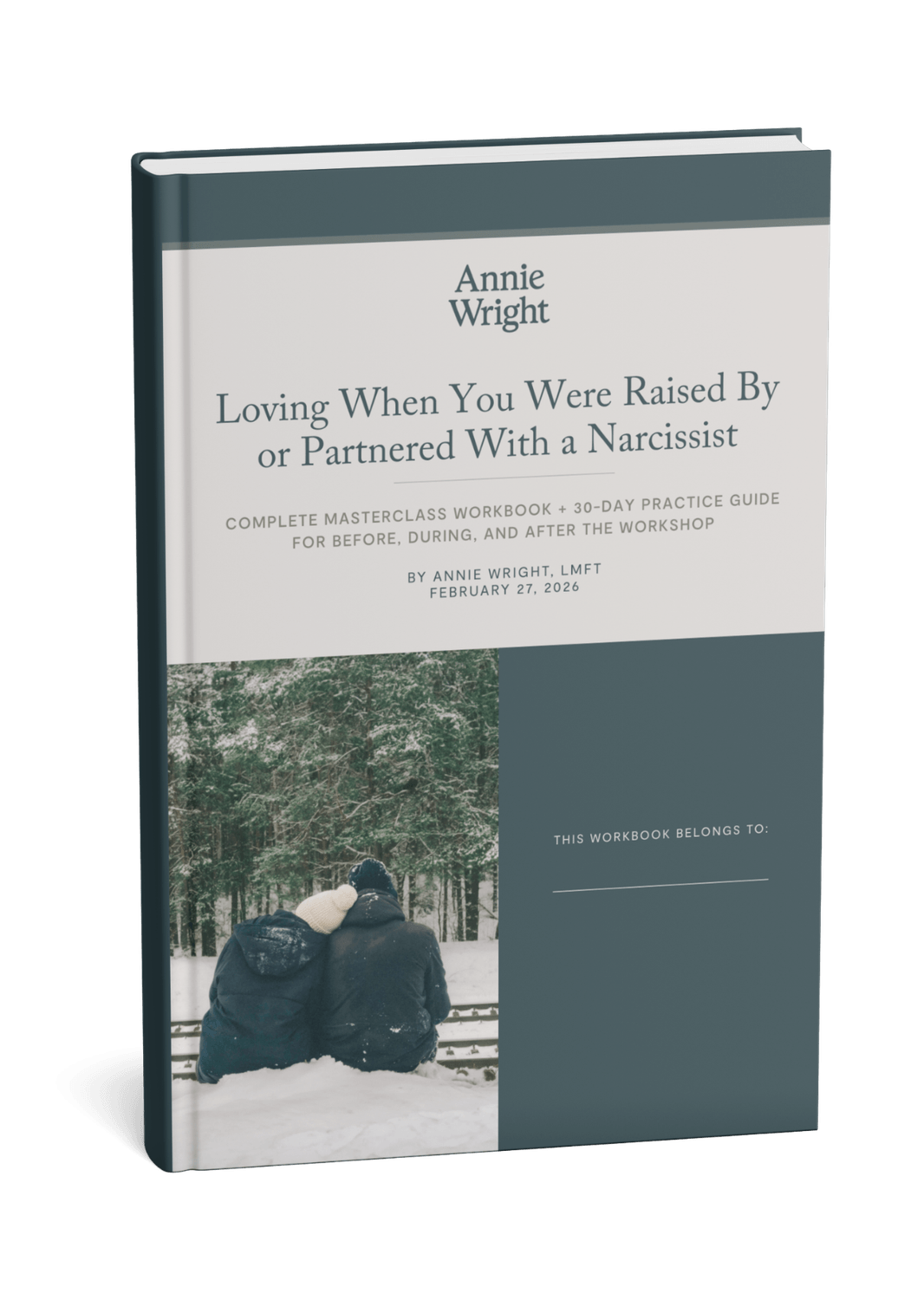
You won’t just leave with insight. You’ll leave with a follow-along workbook and 30‑day practice guide you can use before, during, and after the session so the work actually lives in your day-to-day life.

In 90 minutes, you'll walk away with:
Your Mirror identified—discover which of the Three Mirrors (Reflection, Management, or Redemption) is running your romantic operating system (e.g., “I keep choosing impressive people I can admire” becomes “I’m recreating a dynamic where someone else’s shine matters more than my own.”)
Your Archetype named—understand your specific pattern (The Fixer, The Admirer, The Invisible Partner, or The Rebel) and finally see why your “type” isn’t random—whether you keep choosing the same person or keep choosing no one at al
The neuroscience translated—understand what’s happening in your brain when you’re attracted to the wrong people, why “chemistry” often lies, why safe can feel boring, and why your nervous system might freeze when someone asks what you want
Three concrete practices—The Mirror Reversal, The Boundary Whisper, and The Self-Knowledge Inventory, so you can turn your external scanner inward and reconnect with what you actually feel and want
Language for your pattern that doesn’t shame your history—so you can finally understand why love has felt so hard, and how to approach it differently
A complete masterclass workbook + 30-day practice guide—designed to be used before, during, and after the workshop, with step‑by‑step exercises, reflection prompts, and a gentle structure for the month ahead
Friday, February 27, 2026 • 12:00–1:30pm Eastern • Live on Zoom
$47
90 minutes live + lifetime recording access + robust companion workbook + 30‑day practice guide
Limited to 100 participants to keep it interactive.
What's included
90-minute live workshop on Zoom (camera optional, no forced sharing)
Live Q&A at the end to get your specific questions answered
Lifetime access to the recording so you can revisit the frameworks and practices anytime
The Three Mirrors framework you can use on any relationship pattern, any attraction, for the rest of your life
A robust companion workbook + 30‑day practice guide (delivered before the session) with everything you need to do this work properly:
The Three Mirrors assessment to identify your romantic operating system
The Four Archetypes deep-dive with reflection questions
The neuroscience translation in plain language
All 3 practices with step‑by‑step instructions and “try it now” prompts
The Self-Knowledge Inventory (8 questions to reconnect with your wants)
A flexible 30‑day practice structure (so you can start before the masterclass, follow along live, or begin afterward)
Writing space for every exercise—this isn’t a flimsy PDF, it’s a working document you’ll return to all year
This is for you if:
You were raised by or partnered with someone who was narcissistic, emotionally unavailable, volatile, or chronically critical
You left a narcissistic relationship and still feel hyper-vigilant, unsure of your attraction, or disconnected from what you want
You’ve noticed a pattern in who you’re attracted to—and it’s not a good one
You’ve largely avoided romantic intimacy because wanting things feels dangerous
You’re excellent at reading others but struggle to know what you actually feel
The question “What do you need?” makes your mind go blank
You confuse anxiety for chemistry—and available people feel boring or suspicious
You keep ending up in the same relationship with different faces
You’ve poured yourself into work, causes, or caretaking—and your own desires went underground
You’re in a relationship but feel invisible in it
You’re ready to understand why love has felt so hard—and start approaching it differently

This is not for you if:
You want quick tips to “manifest” a relationship
You’re looking to learn how to change your partner
You’re not willing to look at how your family history shapes your romantic choices
You prefer advice that stays surface-level
What happens if you don't understand your pattern
You'll do what you did last year:
Feel that familiar pull toward someone unavailable and call it “chemistry”
Dismiss the kind, available person as “boring” without understanding why
Find yourself three months into another relationship that drains you—or three months deeper into avoiding intimacy altogether
Wonder why you keep choosing partners who need managing, saving, or impressing
Pour more of yourself into work or causes while your own desires stay underground
Arrive at February 2027 in the same pattern, asking the same questions
Or you can spend 90 minutes this February understanding why your relational GPS keeps pointing you toward what’s familiar instead of what’s healthy—or why it told you to stop wanting at all—and walk away with:
Frameworks to recalibrate it
Practices to stay grounded when old patterns flare
And a concrete, gentle 30‑day guide to begin doing love differently
Friday, February 27, 2026 • 12:00–1:30pm Eastern • Live on Zoom
$47
Live workshop + lifetime recording + complete masterclass workbook + 30‑day practice guide
Limited to 100 participants. Once it’s full, it’s full.
Testimonials
HAVE QUESTIONS?
Frequently Asked Questions
You’ll get lifetime access to the full recording and the workbook. Many participants do the workbook exercises on their own schedule and rewatch the parts that land the hardest.
No. This is an educational workshop. It may be therapeutic, but it’s not a substitute for therapy or individualized treatment.
No one will be forced to share. You’re welcome to keep your camera off, participate in the chat only, or simply listen and work quietly in your workbook.
Yes. There are no upsells required to get the core content, recording, or workbook.
Yes. This workshop is specifically designed for women whose minds go blank when asked what they want. That blank space isn’t confusion—it’s protection. The practices and the 30‑day guide gently build that muscle back.
Most are. That’s completely okay. You don’t need a neat narrative. You just need a willingness to notice how your history shows up in your patterns now.
Because insight alone isn’t enough—your body has to learn that new choices are safe. We’re combining frameworks with nervous-system-aware practices and a 30‑day structure so the work actually lands in your body, not just your mind.
This work absolutely applies. While early family dynamics often set the stage, narcissistic romantic relationships can reinforce—or even create—the same nervous-system patterns around attraction, self-abandonment, and emotional vigilance. The frameworks and practices in this workshop are designed to work regardless of when or how the pattern formed.

YOUR FACILITATOR
Annie Wright, LMFT

I’m a licensed therapist with over 15,000 clinical hours working with driven women from complicated families and from high-impact narcissistic relationships—physicians, nonprofit directors, tech executives, founders, lawyers, educators. Women who are excellent at reading everyone else and have no idea what they actually want in love.
My specialty is the intersection of relational trauma and high achievement—how the survival strategies that made you so good at managing others now shape who you’re attracted to, why you keep choosing partners who deplete you, or why you’ve stopped letting yourself want at all. That’s where this work comes in. I’ve spent years studying what actually helps women like you build relationships that feel as good as they look—not through shrinking your standards, but through recalibrating your wiring.
This workshop is the distillation of that work—the frameworks and practices I return to again and again with clients, now in a format accessible beyond my private practice.